
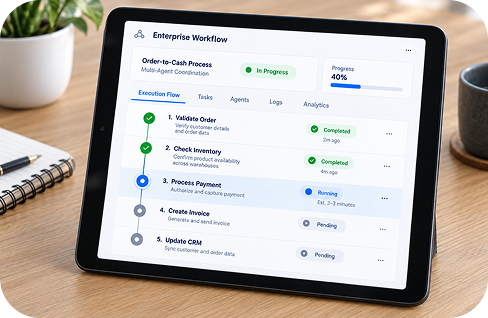
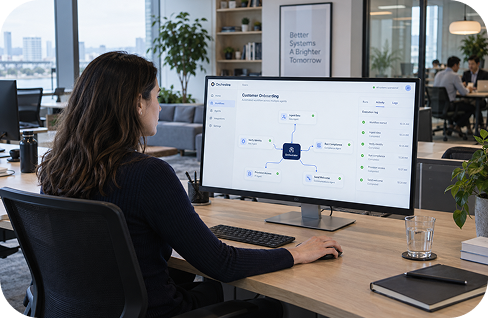
Multi-Agent Orchestration & Enterprise Workflows

18+ years of AI & Software Engineering Expertise
40+ AI-Powered Workflow Solutions Delivered

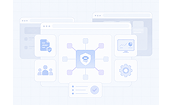
Build coordinated AI agent systems that execute complex business workflows across your enterprise. We develop production-ready multi-agent architectures that delegate tasks, share context, use business tools, manage dependencies, and automate cross-system processes with controlled autonomy.

Request a Consultation

Standards & Best Practices
We Follow.

GDPR API{REST} CCPA OAuth AES 256 RBAC

Multi-Agent Orchestration Standards & Best Practices We Follow

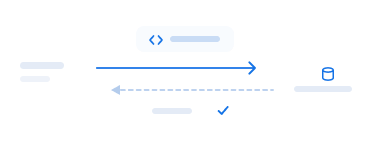
Agent Interoperability & Context Protocols – We design agent ecosystems around MCP, A2A, and standardized API contracts where appropriate, enabling agents to securely access tools, exchange context, discover capabilities, and collaborate across heterogeneous enterprise environments.

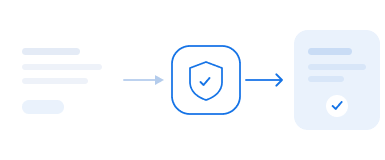
Agentic AI Security & Risk Management – We apply OWASP agentic application security guidance, NIST AI RMF principles, and secure AI engineering practices to reduce risks from uncontrolled tool use, prompt injection, privilege escalation, unsafe actions, and unintended agent behavior.

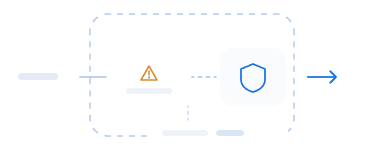
Multi-Agent Security & Execution Controls

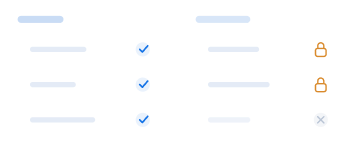
Least-Privilege Tool Access – We restrict each AI agent to approved APIs, systems, datasets, and actions, ensuring agents receive only the permissions required to complete their assigned responsibilities.

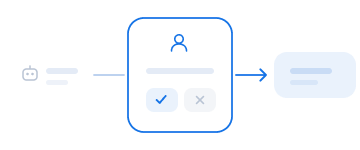
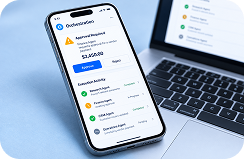
Human Approval & Execution Guardrails – We implement approval checkpoints, confidence thresholds, execution policies, and escalation mechanisms so high-impact actions remain controlled while routine workflows continue autonomously.

Multi-Agent Orchestration & Enterprise Workflow Development Services.

What You Get
with Multi-Agent Orchestration & Enterprise Workflows Development.

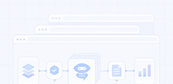
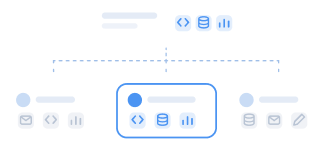
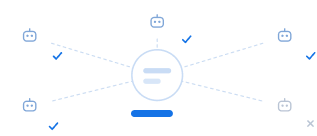
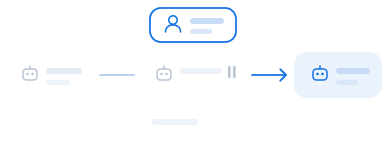
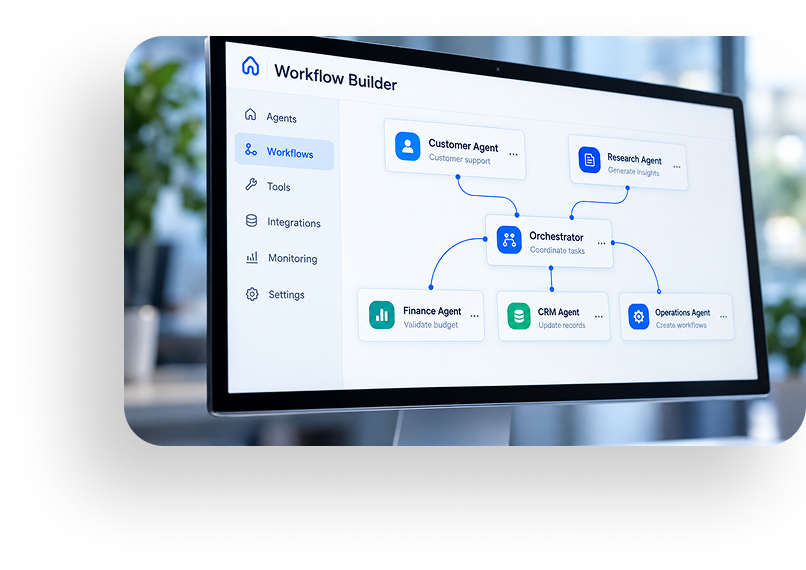
Multi-agent systems coordinate specialized AI agents to complete workflows that require different skills, tools, data, and decisions. We engineer agent architectures that delegate responsibilities, maintain shared context, and execute multi-step business processes reliably across enterprise systems.

From agent role design and orchestration logic to tool integration, workflow state, inter-agent communication, error recovery, monitoring, and human approval, we build scalable multi-agent systems designed for real production environments.

Explore

Multi-Agent Orchestration & Enterprise Workflow Features

Multi-agent orchestration features enable specialized AI agents to collaborate reliably across complex enterprise workflows. From task delegation and context sharing to tool execution, state management, and human approvals, these capabilities transform autonomous agents into controlled production systems.
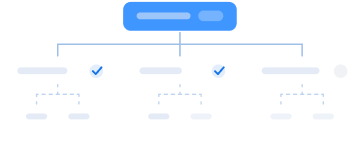
Specialized agentrole definition

Specialized agentrole definition

Capability-basedtask assignment

Capability-basedtask assignment

Agent permissionboundaries

Agent permissionboundaries

Dynamic responsibilityallocation

Dynamic responsibilityallocation

Multi-step taskdecomposition

Multi-step taskdecomposition

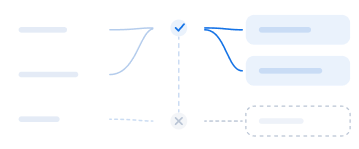
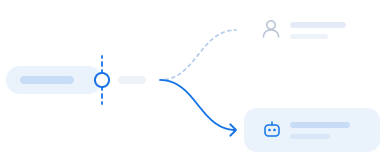
Dynamic taskrouting

Dynamic taskrouting

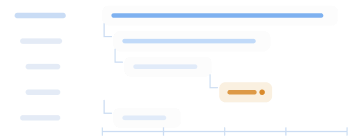
Dependency-awareexecution

Dependency-awareexecution

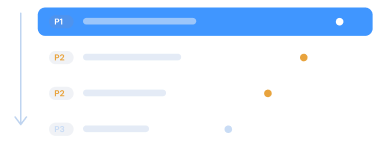
Priority-based task scheduling

Priority-based task scheduling

Agent-to-agentmessaging

Agent-to-agentmessaging

Shared contextexchange

Shared contextexchange

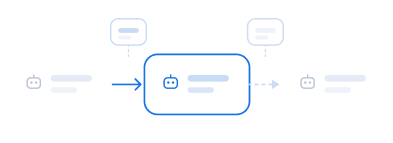
Structured handoffmechanisms

Structured handoffmechanisms

Collaborativedecision workflow

Collaborativedecision workflow

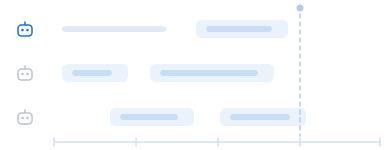
Sequential andparallel execution

Sequential andparallel execution

Persistentworkflow state

Persistentworkflow state

Long-running processmanagement

Long-running processmanagement

Event-driven workflowcoordination

Event-driven workflowcoordination

API and systemtool execution

API and systemtool execution

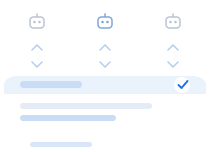
Dynamic toolselection

Dynamic toolselection

Action validationmechanisms

Action validationmechanisms

Controlled business transactionexecution

Controlled business transactionexecution

Automated retrystrategies

Automated retrystrategies

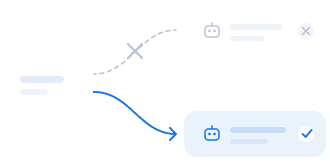
Fallback agentrouting

Fallback agentrouting

Failure and exceptionhandling

Failure and exceptionhandling

Workflow checkpoint recovery

Workflow checkpoint recovery

Human-in-the-loopapprovals

Human-in-the-loopapprovals

Confidence-basedescalation

Confidence-basedescalation

Manual interventionworkflows

Manual interventionworkflows

High-risk action restrictions

High-risk action restrictions

Task completionevaluation

Task completionevaluation

Agent collaborationmonitoring

Agent collaborationmonitoring

Tool executiontracking

Tool executiontracking

Workflow performanceanalytics

Workflow performanceanalytics

Multi-Agent Orchestration Technologies We Use

We use modern agent frameworks, interoperability protocols, AI models, workflow engines, and observability technologies to build secure, scalable multi-agent systems that coordinate enterprise processes and execute actions across existing business applications.

AI & Foundation Models
OpenAI

OpenAI GPT-4o / GPT-4.5: We use OpenAI models to power planning, reasoning, task interpretation, structured outputs, tool selection, and specialized agent roles within multi-agent workflows.

Anthropic

Anthropic Claude: We use Claude for agent workflows requiring long-context reasoning, controlled instruction following, structured task execution, and consistent behavior across complex enterprise processes.

Gemini

Google Gemini: We use Gemini for multimodal and high-volume agent workflows requiring reasoning across different information types and integration with Google Cloud environments.

Llama

Llama: We use Llama for organizations requiring private deployment, infrastructure control, customized agent behavior, or stricter data residency and security requirements.

Multi-Agent Frameworks & Orchestration
LangGraph

LangGraph We use graph-based orchestration to build stateful agent workflows with conditional routing, persistent execution, agent handoffs, and controlled multi-step business processes.

Microsoft AutoGen

Microsoft AutoGen We use AutoGen for multi-agent collaboration scenarios where specialized agents communicate, coordinate tasks, use tools, and jointly solve complex enterprise problems.

CrewAI

CrewAI We use CrewAI to organize role-based agent teams, assign specialized responsibilities, coordinate sequential or collaborative tasks, and prototype multi-agent business workflows.

Semantic Kernel

Semantic Kernel We use Semantic Kernel for enterprise agent architectures requiring plugins, orchestration patterns, AI service integration, process control, security filters, and Microsoft ecosystem connectivity.

Agent Interoperability & Tool Integration
Model Context Protocol (MCP)

Model Context Protocol (MCP) We use MCP-compatible architectures to standardize how agents connect with business tools, data sources, services, and reusable enterprise capabilities.

Agent2Agent Protocol (A2A)

Agent2Agent Protocol (A2A) We use A2A-compatible patterns where independent agents need to discover capabilities, exchange information, delegate tasks, and collaborate across frameworks or platforms.

REST / OpenAPI Integrations

REST / OpenAPI Integrations We connect AI agents with enterprise applications through documented APIs, enabling controlled access to CRM, ERP, HRMS, databases, and operational services.

OAuth 2.0 / OpenID Connect

OAuth 2.0 / OpenID Connect We implement secure authentication and authorization mechanisms to control agent access to enterprise tools, users, resources, and protected business operations.

Workflow, State & Observability Infrastructure
Temporal

Temporal We use durable workflow orchestration for long-running agent processes requiring retries, state persistence, failure recovery, timeouts, and reliable multi-step execution.

Redis

Redis We use Redis for fast workflow state, shared agent context, caching, queues, and temporary coordination data across distributed agent systems.

Apache Kafka

Apache Kafka We use event streaming to coordinate asynchronous agents, trigger workflows, distribute business events, and connect multi-agent systems with event-driven enterprise architectures.

OpenTelemetry

OpenTelemetry We implement distributed tracing and observability to monitor agent calls, workflow paths, tool execution, latency, failures, and dependencies across production multi-agent systems.

Using Multi-Agent Orchestration & Enterprise Workflows
Across Industries

Healthcare
& Life Sciences

Multi-agent systems coordinate scheduling, documentation, patient operations, administrative workflows, and knowledge processing across healthcare platforms. Specialized agents can divide responsibilities, exchange context, and automate cross-system processes while maintaining approval checkpoints for sensitive or high-impact activities.

Banking
& Financial

Multi-agent orchestration automates complex workflows across compliance, fraud investigation, customer operations, document processing, and financial analysis. Specialized agents coordinate tasks and enterprise systems while validation rules, approval gates, and auditability maintain control over sensitive financial operations.

Insurance

AI strategy helps insurers evaluate opportunities across underwriting, claims processing, fraud detection, customer engagement, and risk assessment. Roadmaps prioritize initiatives based on business impact, data readiness, integration complexity, compliance requirements, and expected return on investment.

Logistics
& Transportation

AI strategy helps logistics organizations identify opportunities across route optimization, demand forecasting, fleet management, warehouse automation, and delivery prediction. Enterprise roadmaps prioritize initiatives according to operational impact, data availability, integration requirements, scalability, and expected cost savings.

Education
& eLearning

AI strategy enables educational organizations to evaluate opportunities across adaptive learning, student support, content generation, analytics, and administrative automation. Roadmaps align AI initiatives with institutional goals, data capabilities, technology infrastructure, privacy requirements, and measurable improvements in learning outcomes.

Human
Resources & Recruitment

AI strategy helps HR organizations identify opportunities across recruitment automation, employee support, workforce analytics, talent management, and personalized learning. Enterprise roadmaps prioritize initiatives based on business value, data readiness, integration complexity, responsible AI requirements, and expected productivity gains.

Book a Call with Our AI Experts

Schedule a Consultation

The Business Value
of Multi-Agent Orchestration & Enterprise Workflow Development

End-to-End Workflow Automation

Multiple specialized agents coordinate different stages of complex business processes, enabling organizations to automate workflows that span departments, applications, data sources, and decisions instead of automating isolated individual tasks.

Reduced Manual Coordination

AI agents automatically delegate tasks, transfer context, trigger system actions, and manage dependencies across workflows, reducing repetitive coordination work and allowing employees to focus on exceptions, decisions, and higher-value responsibilities.

Faster Cross-System Execution

Multi-agent orchestration connects AI reasoning directly with enterprise applications and APIs, reducing delays between decisions and actions while enabling workflows to progress automatically across CRM, ERP, databases, and operational systems.

Greater Workflow Resilience

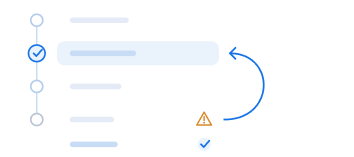
Error handling, retries, fallback agents, checkpoints, and persistent workflow state help multi-agent systems recover from failures and continue execution without requiring teams to restart complex business processes manually.

Controlled Agent Autonomy

Approval gates, permission boundaries, policy controls, and human escalation mechanisms allow organizations to automate routine decisions while retaining direct oversight of high-risk, sensitive, or business-critical agent actions.

Scalable Enterprise Automation

Reusable agent capabilities and orchestration layers can support multiple workflows, departments, and applications, enabling organizations to expand AI automation without rebuilding separate automation architectures for every new business process.

Multi-agent systems automate complex enterprise workflows by coordinating specialized AI agents across applications, data, and teams. We help organizations reduce manual handoffs, accelerate process execution, improve operational resilience, and scale intelligent automation across interconnected business processes.

Frequently Asked Questions.

We're here to help! If you didn't find the answer you were looking for, feel free to reach out to our team.

Multi-agent orchestration development services include designing, building, integrating, and optimizing systems where specialized AI agents collaborate to execute enterprise workflows. They cover agent architecture, task delegation, communication, tool integration, state management, security, monitoring, testing, and production deployment.
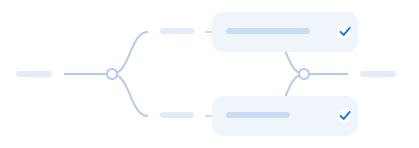
Multi-agent orchestration assigns specialized responsibilities to different AI agents and coordinates how they communicate, delegate tasks, use tools, and share workflow state. An orchestration layer manages execution order, dependencies, handoffs, failures, and final outcomes across the business process.

Multi-agent systems can automate processes involving multiple steps, tools, and decisions, including claims processing, recruitment, customer operations, document workflows, supply chain exceptions, financial operations, research, reporting, onboarding, and other cross-system enterprise processes.

A single agent typically manages one broad task or workflow, while a multi-agent system distributes responsibilities among specialized agents. This enables more structured delegation, parallel execution, expert handoffs, separation of permissions, and coordination across complex enterprise processes.

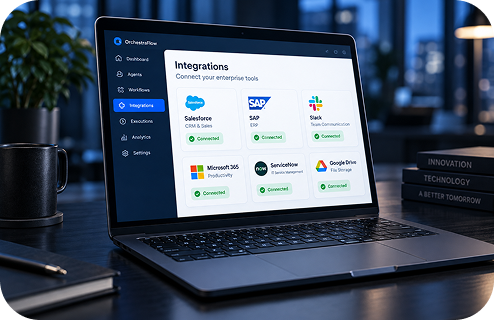
Yes. We connect agents with CRM, ERP, HRMS, databases, communication platforms, internal APIs, and other enterprise applications, enabling agents to retrieve information, trigger workflows, update records, and execute approved actions across your existing technology environment.

Yes. We design and develop custom multi-agent AI solutions around your business processes, systems, and automation goals. We define agent roles, orchestration logic, integrations, permissions, workflows, and human-approval mechanisms to deliver secure, scalable solutions tailored to your operational requirements.

Multi-agent AI development costs depend on workflow complexity, number of agents, integrations, AI models, security requirements, and deployment environment. We assess your requirements and provide a tailored estimate based on the architecture, functionality, and implementation scope.